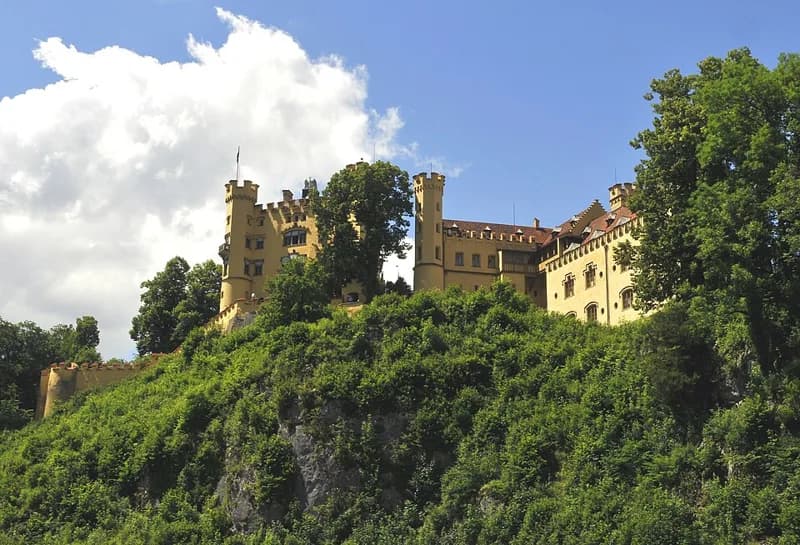
 Childhood summers
Hohenschwangau Palace
His father’s palace and an early world of heroic imagery.
Explore castle
Image credits
Image credits
LBM1948 · Wikimedia Commons · CC BY-SA 4.0 · Resized, converted to WebP and cropped for display
Ludwig II of Bavaria
A young king’s love of music and the past became a remarkable series of palaces. Their beauty also tells a story about the limits of royal power.
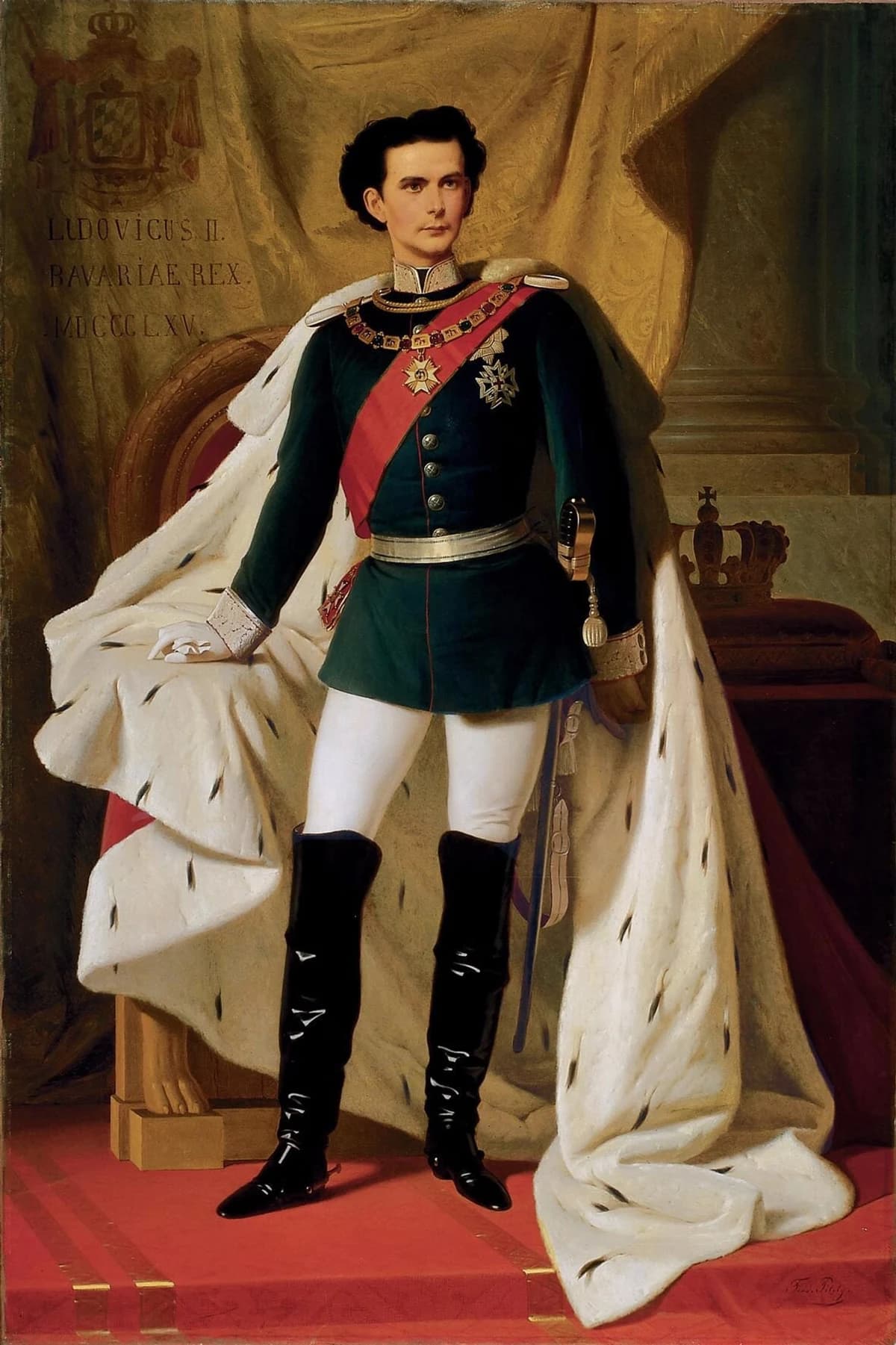
In May 1868, Ludwig II wrote to Richard Wagner about the castle he hoped to build above the Pöllat gorge. He imagined rooms shaped by medieval legends and the composer’s works. Before there was a finished building, there was a letter: a glimpse of the life the king wanted architecture to make possible.
19th-century Bavaria
Born at Nymphenburg Palace on 25 August 1845, Ludwig spent many childhood summers at Hohenschwangau. The heroic stories painted on its walls formed part of his early visual world. That palace was his father’s project; the son would later develop a very different building nearby.
He became king on 10 March 1864, aged eighteen. Bavaria’s defeat alongside Austria in 1866 restricted its independence from Prussia. Against this political background, his palaces can be read as settings for an ideal image of kingship—an interpretation, rather than a complete explanation of his motives.
L1L2L3At Hohenschwangau, Ludwig encountered a palace already filled with images of knights and heroic legend. His father, Maximilian II, had transformed the older ruin into a royal residence. For the young prince, the past was something encountered in rooms, paintings and the surrounding landscape.
His 1868 letter to Wagner connects that imaginative world to Neuschwanstein. He described a castle in the style of old German knights’ strongholds, with associations drawn from Tannhäuser and Lohengrin. The project turned cultural admiration into a setting for private life.
L3L4Ludwig summoned Wagner to Munich in 1864 and helped rescue him from financial difficulty. Their relationship gave the young king a way to support an art he deeply admired, while drawing the composer into the realities of court life. Wagner’s departure from Munich in 1865 did not end that artistic connection.
Neuschwanstein’s connection to opera concerns its imagery and conception. Wagner was not its architect. Keeping the roles distinct makes the story richer: a royal patron, musical works and the people who designed and built a palace all contributed in different ways.
L1L2L4Behind Neuschwanstein’s historicist exterior were hot-air heating, running water, flushing toilets and an electric bell system. Some floors had telephones. The construction process also used modern engineering.
The throne hall presents an ideal of sacred kingship, while these practical systems belong to the nineteenth century. Ludwig’s imagined past was selective: he could surround himself with its symbols without giving up the comforts of his own time.
L5At Herrenchiemsee, Ludwig pursued another historical ideal: a palace honouring Louis XIV and modelled on Versailles. He bought the island in 1873, and construction began in 1878. The work remained unfinished when he died.
In June 1886, Ludwig was declared unfit to rule. On 12 June he was taken from Neuschwanstein to Berg Palace; the following day he and the psychiatrist Bernhard von Gudden died in Lake Starnberg. The precise circumstances remain unresolved. His buildings survive as material evidence of his ambitions, even where the final chapter of his life resists a simple explanation.
L2L7L9CHRONOLOGY
Born at Nymphenburg Palace.
Becomes king at eighteen; meets Wagner.
Bavaria’s defeat brings an alliance with Prussia.
Neuschwanstein takes shape in plans; its foundation stone is laid.
Construction starts at Herrenchiemsee.
First stays in Neuschwanstein’s completed rooms.
Removed from government; dies in Lake Starnberg.
PLACES & CONNECTIONS
Each connection has its own story. Building, finding refuge and facing a siege are very different relationships.
Childhood summersHis father’s palace and an early world of heroic imagery.
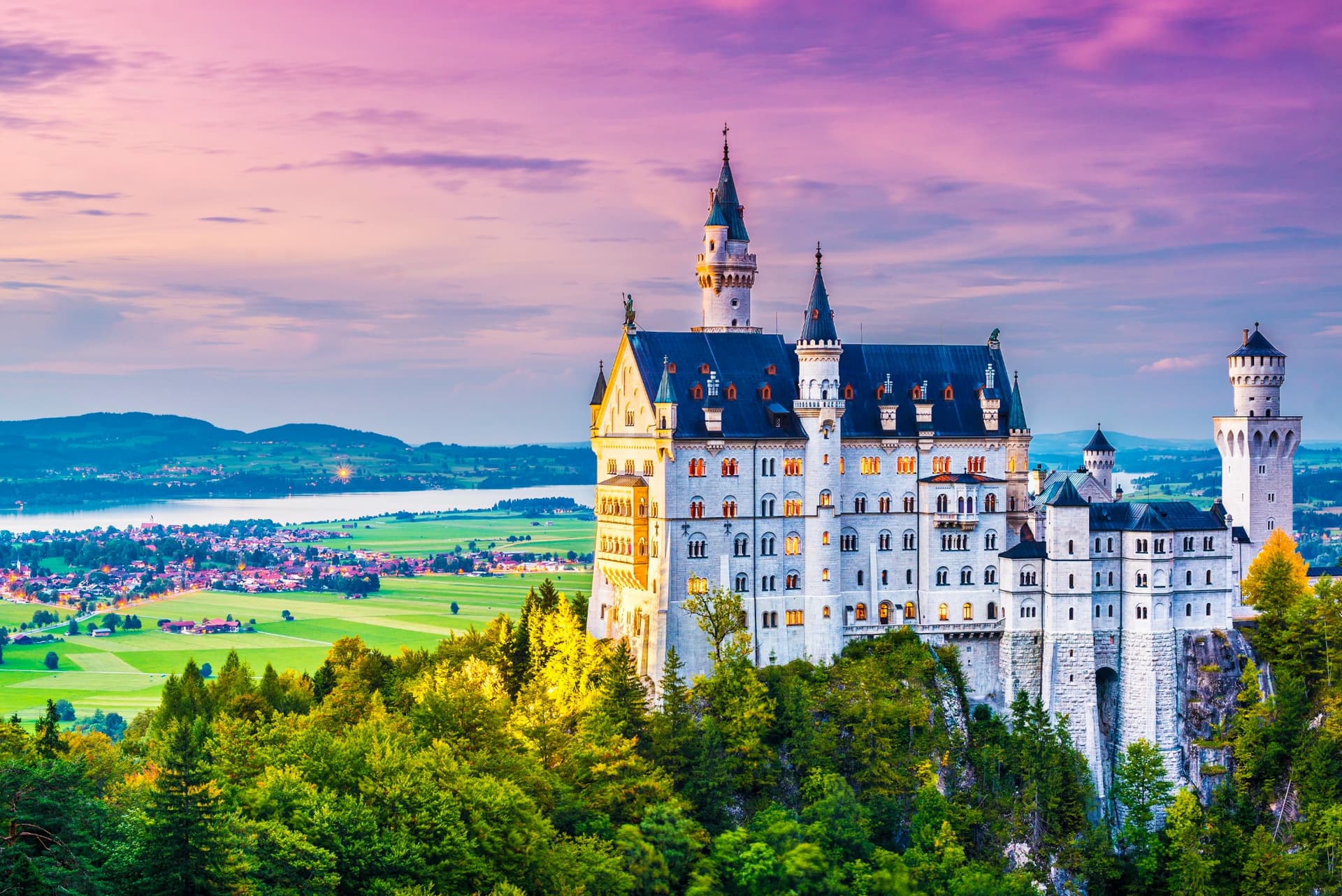 Commissioned & inhabited
A private ideal shaped by legend, kingship and modern engineering.
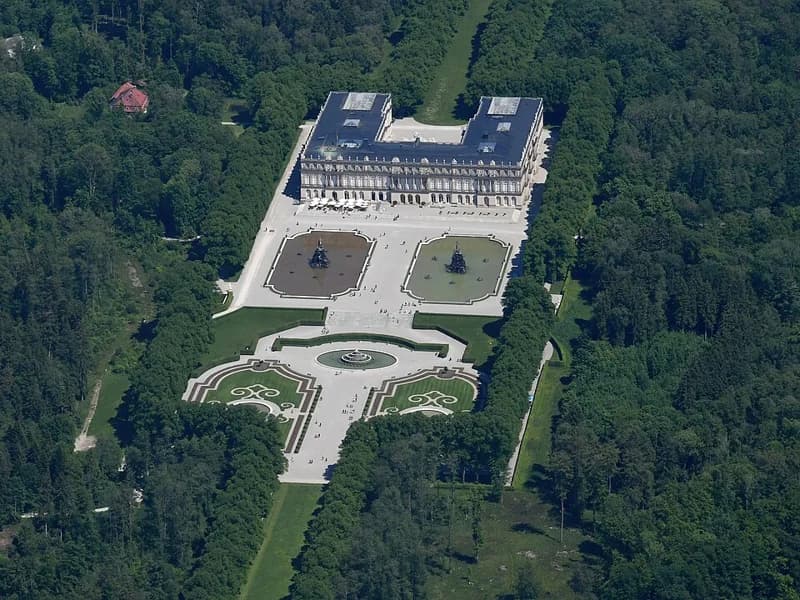 Commissioned
An unfinished homage to Louis XIV and Versailles.
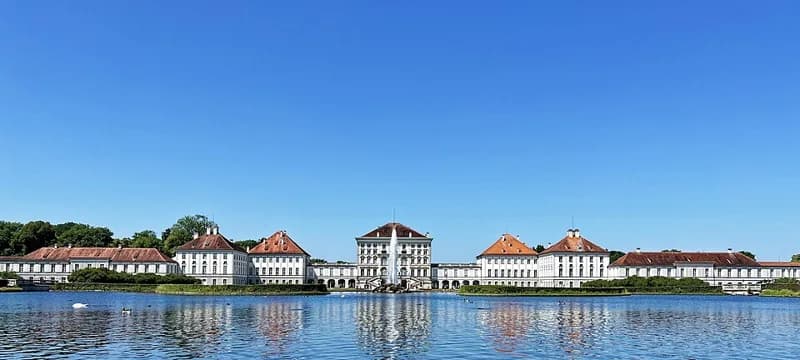 Birthplace
The royal family setting at the beginning of his life.
HISTORY & MEMORY
Some short biographies say nineteen. His birth and accession dates establish that he was eighteen.
Neither murder nor suicide is presented here as an established conclusion. The circumstances of 13 June 1886 remain disputed.
The palaces express artistic and political ideals; they cannot by themselves establish a medical diagnosis or explain every motive.
Based on heritage institutions, museums, academic research and historical documents. Sources are attached to the relevant sections.
Editorial review · 27 October 2026
CONTINUE READING